

As an Amazon Associate, I earn from qualifying purchases. Some links in my guides go to Amazon, and buying through them costs you nothing extra. Read the disclaimer.
If it’s a built-in generator in a motorhome, usually yes. Motorhome manufacturers and generator makers such as Cummins Onan design onboard generators to be run while the vehicle is moving, most often to power the roof air conditioners on hot days. A portable generator is different. Never run one in a truck bed, a trailer or a storage compartment while driving.
What the manuals say
Read both the motorhome owner’s manual and the generator manual. Most Class A and Class C manufacturers allow running the generator while driving. A few add conditions about exhaust routing or fuel level. If the manuals are silent, ask the manufacturer.
Why people run it on the road
- The dash air conditioner can’t cool a large motorhome on a hot day. Roof ACs need 120 volt power.
- Keeping a residential fridge running without draining the house batteries.
- Letting passengers use the microwave or outlets.
Safety rules while driving
- Exhaust: make sure the generator exhaust system is intact and the tailpipe extends past the edge of the coach. A damaged exhaust can let CO into the vehicle.
- CO alarm: test it before every trip. RVs with generators are required to have CO alarms under NFPA 1192.
- Fuel stops: turn off the generator before refueling. Gas stations and fire codes generally require all ignition sources to be off.
- Propane: many owners also turn off propane appliances at fuel stops and in tunnels where rules require it.
- Load: start the generator and let it stabilize before turning on the ACs.
Portable generators: don’t
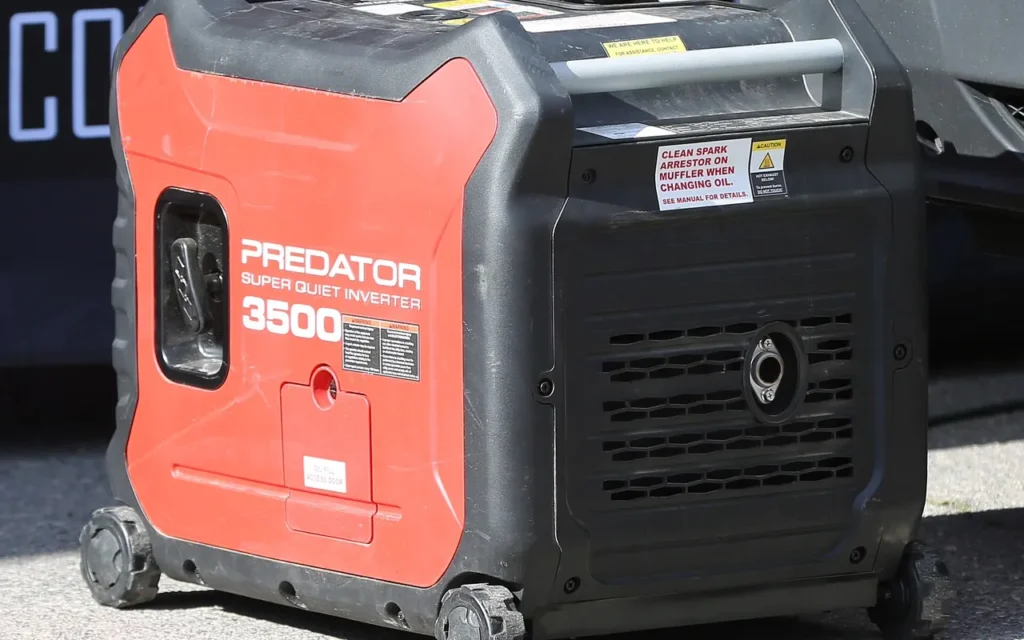
Running a portable generator while driving puts exhaust, fuel and a hot engine in a moving vehicle. Gasoline can spill, the generator can shift or tip, and exhaust can enter the cab or trailer. Shut it down, let it cool and secure it before you drive. If you need power on the move, a battery bank with an inverter or a DC-DC charger from the vehicle’s alternator is the safer route.
The shared fuel tank
Gasoline and diesel onboard generators usually draw from the vehicle’s main fuel tank. Manufacturers fit the generator’s fuel pickup higher in the tank than the engine’s pickup, so the generator stops at around a quarter tank, leaving fuel for driving. If your generator quits on the road, check the fuel gauge before anything else.
Fuel use adds up. Cummins Onan figures put an 8 kW diesel running two ACs at roughly 0.6 to 0.8 gallon an hour. Gasoline units of similar size burn more. Check your model’s figures in the cost of running an RV generator guide.
Pre-drive checklist
- Fuel level above half, so the generator won’t hit its cutoff mid-drive.
- Exhaust visually checked before departure.
- CO alarm tested.
- Generator started and loads stabilized before pulling out.
- A plan to shut it off at fuel stops.
Three habits undo those precautions:
- Forgetting to switch the generator off before fueling.
- Running it with a known exhaust leak.
- Letting the main tank run low and stalling the generator in the heat.
Extra hours, extra maintenance
Running the generator while driving adds engine hours. Cummins Onan’s gasoline RV generator manuals call for oil changes at set hour intervals, commonly every 150 hours or yearly, whichever comes first, so long drives with the AC on count toward that. Check the hour meter regularly.
Driving with the generator on
Does running the generator while driving hurt it? Not if the manufacturer allows it and maintenance is kept up.
Can a travel trailer’s built-in generator run while towing? Check the trailer and generator manuals. Many prohibit it or give conditions.
Will running the generator use more fuel than idling the engine for dash air? Usually the generator uses less than idling a big chassis engine, and it cools the whole coach better.
Does running the generator while driving void the warranty? Not when the RV and generator manuals allow it. Check both and keep up the scheduled maintenance.
Can I run the roof AC from the dash with the engine alone? No. Roof air conditioners need 120 volt power, from the generator, shore power, or a large inverter and battery bank.
See carbon monoxide and RV generators, sizing an RV generator and the RV hub.
