

As an Amazon Associate, I earn from qualifying purchases. Some links in my guides go to Amazon, and buying through them costs you nothing extra. Read the disclaimer.
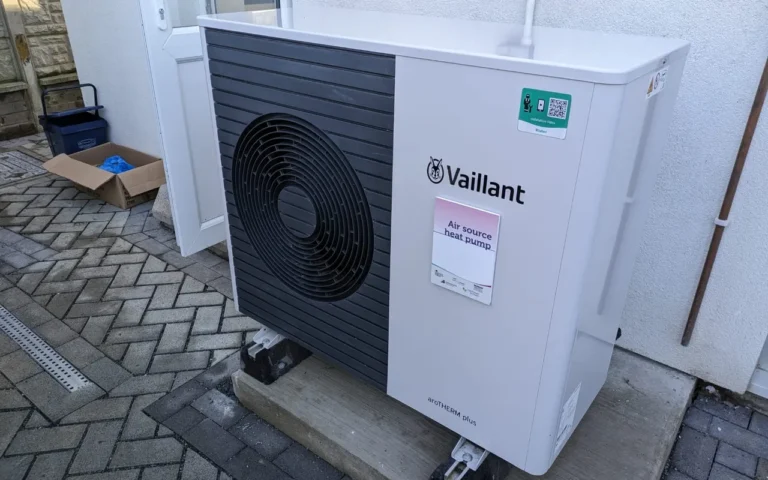
Sometimes, with the right generator and some planning. A central heat pump is one of the hardest household loads for a portable. It runs on 240 volts, draws a lot of power and has a big start-up surge. The electric backup heat strips that many systems use are usually out of reach.
How much does a heat pump draw?
- Compressor running: roughly 2,000 to 5,000 watts for a typical 2 to 5 ton central system.
- Start-up surge: listed as LRA on the outdoor unit’s data plate, and often several times the running draw.
- Auxiliary heat strips: commonly 5 to 15 kilowatts. Plan on keeping these off while on generator power.
- Air handler fan: a few hundred watts more.
Where do you find the real numbers?
- RLA (rated load amps) gives a rough running current. Multiply by 240 for watts.
- LRA (locked rotor amps) is the start-up current without a soft starter. It’s often 5 or more times RLA.
- MCA and MOCP (minimum circuit ampacity, maximum overcurrent protection) tell the electrician how the circuit is sized.
Take a photo of the plate and the air handler’s plate before you shop for a generator.
What size generator for a 3 ton unit?
Say the compressor RLA is 14 amps, about 3,400 watts running, and the LRA is 80 amps. Without a soft starter, the start-up demand can be far beyond a typical portable’s surge rating. With a soft starter, the start current can drop a lot, often by more than half according to soft starter makers. That makes a 9,000 to 10,000 watt portable workable with the fridge and lights on. Your numbers will differ, and this example is only to show the method.
What does it take to make it work?
- 240 volt connection through a transfer switch or interlock. A heat pump can’t run on extension cords. See transfer switch options.
- Generator size: as a starting point, about 7,500 to 10,000 running watts for a 3 ton system, with fridge and lights on top.
- A soft starter on the compressor can cut the surge a lot, sometimes enough to drop a generator size. HVAC techs can fit one.
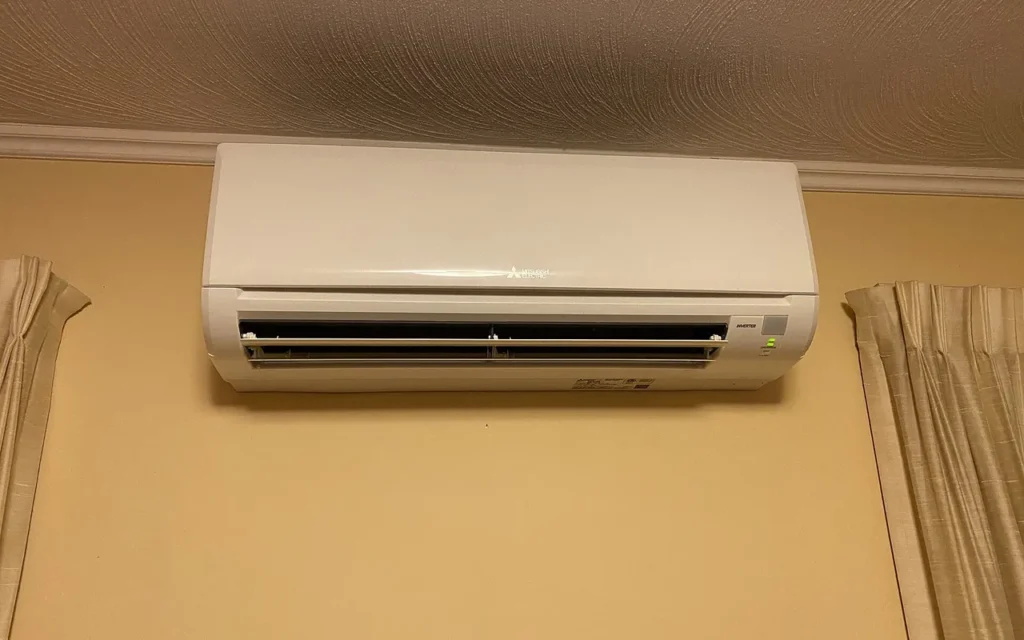
- Ductless mini-splits with inverter compressors ramp up gently and are much easier to run on a portable.
What are the steps?
- Have an electrician install a 240 volt transfer switch or interlock with a 30 or 50 amp inlet sized to your generator.
- Ask an HVAC tech about a soft starter for your compressor model.
- Set the thermostat to lock out or limit the auxiliary heat strips during generator use, if it allows.
- Test the whole setup on a mild day before you need it.
Both trades are involved: an electrician for the connection and an HVAC tech for the soft starter and thermostat settings.
What does a winter outage look like?
A home with a 3 ton heat pump, a soft starter and a 9,500 watt portable connected through a 240 volt interlock. The owner locks out the heat strips, sets the thermostat a couple of degrees lower and runs the heat pump, fridge and lights. The heat pump cycles at roughly 3,000 to 3,500 watts while running, leaving room for the fridge and lights. In very cold weather, heat pump output falls, so the home may cool slowly. A backup heat source that doesn’t need electricity, like a properly vented gas fireplace, is worth considering.
What can overload the generator?
- Leaving emergency heat on. The strips can overload the generator instantly.
- Short-cycling the heat pump by turning it on and off repeatedly. Many units have a delay for good reason.
- Underestimating fuel use. A generator running a heat pump at a heavy load can burn over a gallon of gasoline an hour.
What about mini-splits and standby units?
Can a small inverter run a mini-split?
Often yes, for a single-zone inverter mini-split drawing under about 1,500 watts. Check the unit’s spec sheet.
Is a standby generator better for heat pumps?
Often, because larger units can handle the start-up load directly. See standby sizing for a 2,400 sq ft home.
Lock out the backup heat strips at the thermostat before you switch to generator power. Get the actual figures from your unit’s data plate or an HVAC tech. For other big loads, see sizing a portable for the house and the sizing and wattage hub.
