

As an Amazon Associate, I earn from qualifying purchases. Some links in my guides go to Amazon, and buying through them costs you nothing extra. Read the disclaimer.
Yes. Every generator that burns gasoline, propane or diesel makes carbon monoxide, and the onboard generator in a motorhome or toy hauler is no exception. Built-in units vent exhaust under or beside the coach, so the gas usually stays outside. But it can get in, and that’s why RVs carry CO alarms.
What RV standards require
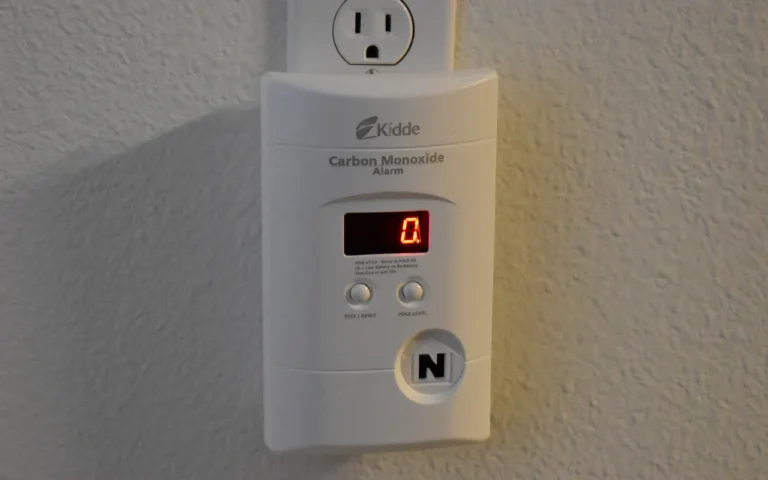
Recreational vehicle standards (NFPA 1192) require a listed CO alarm in RVs that have fuel-burning appliances or an onboard generator. Many RV makers also fit a combined LP gas and CO alarm near the floor. Don’t disable an alarm that chirps. A chirp usually means a low battery or end of life, so replace it.
Placing and maintaining the CO alarm
- Follow the alarm maker’s placement instructions. Many RV CO alarms mount low on a wall near sleeping areas.
- Don’t place alarms right next to cooking appliances or vents, where false alarms are common.
- Vacuum dust from the vents occasionally.
- Replace the alarm by its end-of-life date, even if it still seems to work.
How CO gets inside
- Blocked exhaust. Snowbanks, tall grass, a wall or another RV parked tight against the tailpipe can push exhaust back under the coach.
- Damaged exhaust. A cracked pipe, loose clamp or rusted muffler leaks gas close to the floor.
- Open windows and vents on the generator side, especially with roof fans pulling air in.
- Your neighbor’s generator. At a tight campsite, someone else’s exhaust can drift into your windows.
Symptoms and what to do
CO poisoning feels like flu: headache, dizziness, weakness, nausea, confusion. Pets and children are often affected first. If the alarm sounds or anyone feels these symptoms:
- Get everyone out into fresh air immediately.
- Shut off the generator if you can do so safely.
- Call emergency services if anyone has symptoms.
- Don’t go back in until the RV is aired out and you’ve found the cause.
Habits that keep you safe
- Test the CO alarm before every trip and replace it by the date on the label. Most last about 5 to 10 years.
- Check the exhaust system each season, and after any scrape or bump underneath.
- Don’t run the generator while sleeping unless the alarm works and the exhaust is clear. Never run it with the tailpipe against an obstacle.
- Know the symptoms of CO poisoning: headache, dizziness, nausea, confusion. If the alarm sounds, get everyone outside into fresh air first, then figure out why.
Pre-trip and campsite checklist
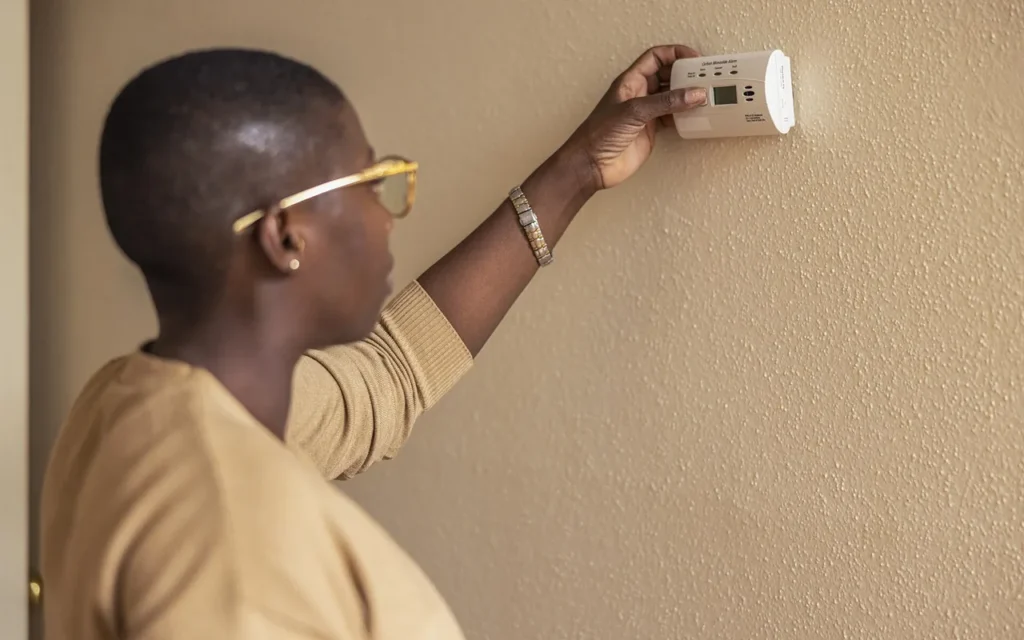
- Press the test button on the CO alarm and check the expiry date on its label.
- Look under the coach at the generator exhaust: no cracks, holes or loose clamps. The tailpipe should extend past the edge of the RV as designed.
- When you park, check what’s near the tailpipe: walls, trees, tall grass, another RV, or snow.
- Close windows and vents on the generator side while it runs, especially at night.
- Agree on quiet hours and generator spacing with neighbors at tight sites.
And never do any of these:
- Running a portable generator inside a storage bay, the truck bed under a cap, or a toy hauler garage.
- Sleeping with the generator running while parked against a snowbank or wall.
- Assuming propane is “clean”. Propane engines make CO too.
Signs it needs a technician
If you smell exhaust inside, see soot near the generator compartment, or the alarm sounds with no clear outside cause, have the exhaust system inspected by an RV service center before running the generator again.
Other RV carbon monoxide concerns
Can I run the generator while driving?
Many motorhome makers allow it. See running an RV generator while driving.
Do propane detectors also detect CO?
Some RV alarms combine LP gas and CO sensing. Others detect only one. Check the label. You need CO detection whenever a generator or fuel-burning appliance is used.
How far from the RV should a portable generator be?
As far as your cord safely allows, with the exhaust pointed away. CPSC guidance for homes is at least 20 feet, a useful benchmark at campsites too.
Portable generators carry the same risk, and the same rules apply. Keep them well away from the RV and never inside a storage compartment. More on RV power is in the RV and camping hub, and general safety is in hookups and safety. Also useful: choosing an RV generator size.
