
Close Menu
  • Guides
    • Generator Fuel
    • Home Backup & Standby
    • Portable & Inverter
    • RV & Camping Power
    • Solar & Battery Power
    • Hookups & Safety
    • Sizing & Wattage
  • Tools
    • Generator Wattage Calculator
    • Fuel Run-Time Calculator
  • About
    • About Generator Savvy
    • Photo Credits
    • Privacy Policy
  • Contact
Generator SavvyGenerator Savvy
Home»Standby Generator»How Much Propane Do Standby Generators Use?
Standby Generator

How Much Propane Do Standby Generators Use?

Ethan WalkerBy Ethan WalkerOctober 13, 2025Updated:October 17, 2026No Comments4 Mins Read
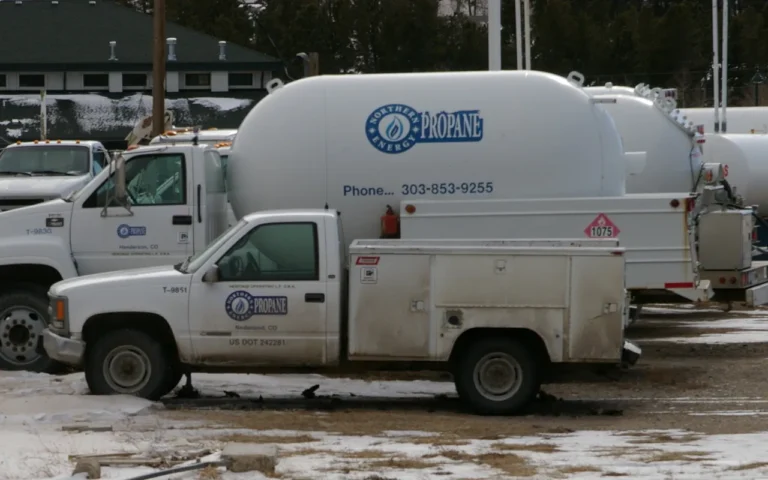
A propane delivery truck and a service pickup parked in a supplier's yard

As an Amazon Associate, I earn from qualifying purchases. Some links in my guides go to Amazon, and buying through them costs you nothing extra. Read the disclaimer.

A typical air-cooled home standby generator burns roughly 2 to 4 gallons of propane an hour while running under load. Generac’s spec sheet for the 22 kW Guardian lists 2.53 gallons an hour at half load and 3.90 at full load. Smaller units use less. The 16 kW model is listed at 2.03 and 2.94 gallons an hour.

Burn rates by model

Model 1/2 load Full load
16 kW 2.03 gal/hr 2.94 gal/hr
20 kW 2.37 gal/hr 3.56 gal/hr
22 kW 2.53 gal/hr 3.90 gal/hr

Source: Generac Guardian 16–22 kW specification sheet. Other brands publish similar tables. Check your model.

Hours per tank size

Tank (water capacity) Usable at ~80% fill Hours at 2.5 gal/hr
120 gallon ~96 gallons ~38 hours
250 gallon ~200 gallons ~80 hours
500 gallon ~400 gallons ~160 hours
1,000 gallon ~800 gallons ~320 hours

Generator-only, at the Generac 22 kW half-load rate. Shared tanks last less.

How long your tank lasts

Propane tanks are normally filled to about 80 percent of capacity to leave room for expansion. A 500 gallon tank holds about 400 usable gallons.

  • At 2.5 gallons an hour (a 22 kW unit at half load), 400 gallons lasts about 160 hours, roughly 6 to 7 days of continuous running.
  • A 250 gallon tank (about 200 gallons usable) lasts about 80 hours at that rate.
  • A 100 pound cylinder (about 23.6 gallons) lasts only around 9 hours. That’s why cylinders aren’t used for whole-house standby units.

If the same tank also feeds your furnace, water heater or range, the runtime is shorter. Many households also don’t run at half load all day, so real runtime is often longer.
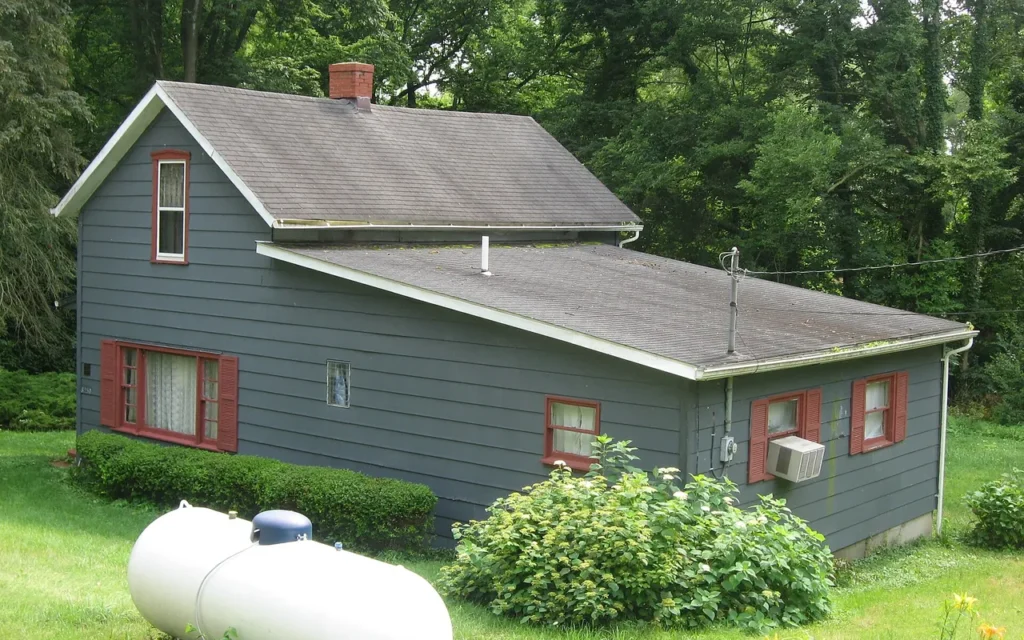
A white residential propane tank on the lawn beside a small gray house
A typical above-ground residential tank. Its size sets how many days a standby unit can run before a refill. Photo: Nyttend (Public domain), via Wikimedia Commons.

A three-day ice storm, in gallons

A house with a 22 kW Guardian on propane loses power for 72 hours in January. The generator averages about 40 percent load, with the furnace, fridge, freezer, lights, well pump cycling and some cooking. That’s a little under the half-load burn rate, call it about 2.3 gallons an hour. Over 72 hours that’s about 165 gallons. If the same 500 gallon tank also feeds the furnace, which might use several gallons a day in that cold, the total could reach 180 to 200 gallons. Starting at 60 percent full (300 gallons), you’d finish the storm with about 100 gallons left. Starting at 30 percent, you’d run dry.

Propane used between outages

Standby units run a short exercise cycle on a schedule, often weekly, sometimes less frequently on newer controllers. These runs are at light load and short, so they use only a little fuel, but it adds up over a year. Check your controller settings.

Cold weather and vaporization

A tank must turn liquid propane into vapor fast enough to feed the engine. Smaller tanks in very cold weather may not keep up with a large generator at full load. Your propane supplier can size the tank for your generator and climate.

Planning your propane supply

  • Keep the tank above about 50 percent going into storm season.
  • Ask about automatic delivery, or a tank monitor that alerts you and the supplier.
  • Know where the tank shutoff is.
  • Clear snow from the regulator and tank.

Plans usually fall short in one of these ways:

  • Sizing the tank for normal heating use only.
  • Assuming the generator always runs at full load. Plan for typical loads, but have a margin.
  • DIY regulator or line changes. That’s licensed gas work.

Using less during an outage

  • Avoid running big electric loads you don’t need. Load-managed systems help automatically.
  • Lower the thermostat a few degrees.
  • Batch cooking and laundry so they don’t overlap with other heavy loads.

Propane use in brief

Is natural gas cheaper than propane to run a generator?

Often per unit of energy, but it depends on local prices. Natural gas also removes storage worries.

Can I switch my standby from propane to natural gas later?

Many models are field-convertible using the manufacturer’s procedure.

What does a tank monitor do?

It reports the tank’s fill level to your phone and often to the supplier, so deliveries happen before the tank runs low.

Plan run time with the fuel run-time calculator. See also how big a standby to buy, install costs and the fuel hub.

Keep reading

  • Portable vs Standby Generator: Which One Fits Your Home?
  • Is It Really Worth It to Buy a Whole House Standby Generator?
  • How Big of a Standby Generator Should I Buy?

More in Home Backup & Standby · Run the numbers with the wattage calculator

Ethan Walker

Written by Ethan Walker

I’m Ethan. I research every guide from owner’s manuals, manufacturer spec sheets and the electrical code, and I’ll tell you when a job belongs to a licensed electrician or gas fitter.

More about me · How I research

Ethan Walker
Ethan Walker
  • Website

Hi, I’m Ethan Walker, and I created Generator Savvy to make generator topics easier to understand without all the fluff. I’ve always been the kind of person who researches gear before buying it, especially when it comes to backup power, camping equipment, RV setups, and home preparedness. Over the years, I found that generator advice online was often either too technical or too vague. That pushed me to start writing clear, practical content that helps everyday people compare options, understand how different generators work, and make smarter buying decisions. At Generator Savvy, I focus on real-world questions about portable generators, inverter models, dual fuel options, camping use, RV compatibility, fuel choices, and backup power planning. My goal is simple. I want this site to be a useful place for people who want straight answers before they spend money or depend on a generator when it matters most.

Related Posts

What Are the Ratings on a Generac Guardian 16,000-Watt Standby Generator with Transfer Switch?

December 3, 2025

How to Install a Generac Powerpact 7,500-Watt (LP)/6,000-Watt (NG) Standby Generator

December 3, 2025

Whole House Standby Generator for a 2400 Sq Ft Home?

December 3, 2025

What Engine Does a Generac 70361 Home Standby Generator 16/16 kW Air-Cooled with Wi-Fi Have?

December 2, 2025

Do I Need a 100 Amp or 200 Amp Transfer Switch for My Home Standby Generator?

December 2, 2025

What Can a Guardian 10,000-Watt Air-Cooled Home Standby Generator with Wi-Fi Power?

December 2, 2025
Add A Comment
Leave A Reply Cancel Reply

About Generator Savvy

I'm Ethan Walker. I check the advice here against owner's manuals, spec sheets and the electrical code, so you can size, fuel and hook up a generator without guesswork.

Generator Savvy

I'm Ethan Walker. I research these guides from owner's manuals, spec sheets and the electrical code, so you can size, fuel and hook up a generator without guesswork. More about me

Email: contact@generatorsavvy.com

Guides

  • Generator Fuel
  • Home Backup & Standby
  • Portable & Inverter
  • RV & Camping Power
  • Solar & Battery Power
  • Hookups & Safety
  • Sizing & Wattage

Tools

  • Generator wattage calculator
  • Fuel run-time calculator

The site

  • About
  • Contact
  • Editorial Policy
  • Privacy Policy
  • Disclaimer
  • Terms and Conditions
  • Photo Credits
© 2026 Generator Savvy. Generator advice is general information; wiring and gas work should be done by licensed professionals.

Generator Savvy is a participant in the Amazon Services LLC Associates Program, an affiliate advertising program designed to provide a means for sites to earn advertising fees by advertising and linking to Amazon.com. As an Amazon Associate, I earn from qualifying purchases.

Type above and press Enter to search. Press Esc to cancel.