

As an Amazon Associate, I earn from qualifying purchases. Some links in my guides go to Amazon, and buying through them costs you nothing extra. Read the disclaimer.
If outages are rare and short, and you’re happy to roll a generator out and refuel it, a portable with a proper transfer switch is the better value. If outages are frequent or long, someone in the house relies on powered medical equipment, or nobody can safely handle a 200-pound machine in a storm, a standby generator earns its much higher price.
Portable vs standby at a glance
| Portable (5–10 kW) | Home standby (10–26 kW air-cooled) | |
|---|---|---|
| Typical total cost | About $700 to $3,500 including an installed inlet and interlock or transfer switch | Commonly $10,000 to $20,000+ installed, depending on size, gas line and electrical work |
| Starting | By hand (recoil or electric start), after you set it up outside | Automatic, usually within seconds of an outage |
| Fuel | Gasoline, propane or both. You refuel it. | Natural gas or a large propane tank. No refueling for natural gas. |
| What it runs | Essentials. Big loads one at a time. | Essentials to whole house, often including central air |
| Upkeep | Oil changes, fuel rotation, storage | Scheduled service, and a weekly or periodic self-test exercise |
Price ranges are typical figures from installer price lists and manufacturer materials. Local quotes vary a lot.
What each one really costs
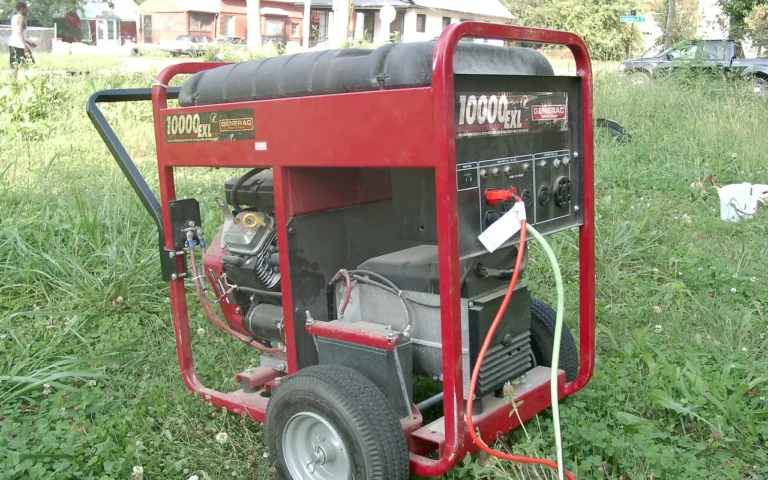
Portable: the transfer switch or interlock installation, cords, fuel storage and stabilizer, and the time you spend setting up. Gasoline goes stale in months without stabilizer.
Standby: permits, a concrete or composite pad, the gas line, possible service-entrance changes, and annual maintenance. Manufacturers such as Generac recommend periodic service intervals, with oil changes based on hours and time.
Two homes, two different answers
A suburban home on natural gas loses power twice a year for a few hours. A 7,500 watt dual-fuel portable with an interlock covers it for a few thousand dollars installed. A rural home with a well, a basement sump and multi-day winter outages faces bigger risks, like frozen pipes and a flooded basement, and has an elderly resident. That home leans strongly toward standby, sized with load management.
Five questions that settle it
- How often, and for how long, do you lose power? Your utility’s reliability reports, or simply your own records, are the best guide. The U.S. Energy Information Administration publishes average interruption figures by state that are useful for comparison.
- What must keep running? A fridge, freezer and sump pump suit a portable. Central air, an electric water heater and a well pump all running at once point to standby.
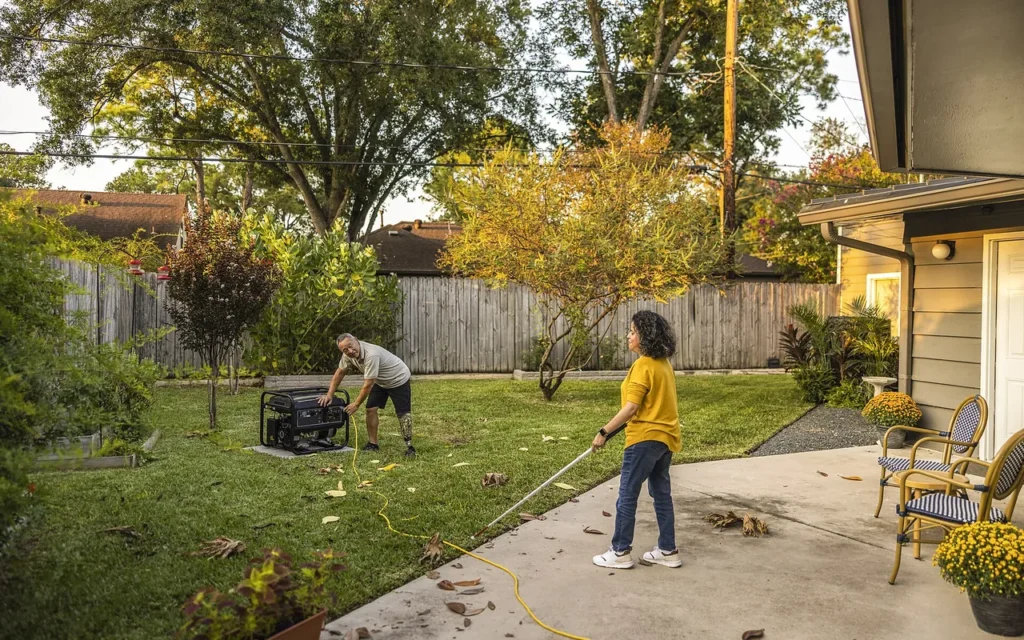
- Who will be home? A standby works when you’re away. A portable needs someone to set it up and refuel it, often in bad weather.
- Medical needs? Oxygen concentrators and other critical equipment justify an automatic system, often with a backup plan on top.
- Fuel access? Homes on a natural gas line can run a standby for days without refueling. Gasoline is hard to buy during a regional outage.
The in-between option
Some households start with a large portable, around 7,500 to 10,000 watts with a 240 volt outlet, plus an interlock. Later they upgrade to standby if outages turn out to be a regular problem. Others pair a standby sized for essentials with load management, which costs less than a full whole-house unit.
Planning mistakes on both sides
- Buying a portable without planning the house connection. Extension cords can’t reach a furnace or well pump.
- Choosing a standby size from square footage. See how to size a standby generator properly.
- Forgetting carbon monoxide safety. Portables must run outdoors, at least 20 feet from the house per CPSC guidance.
Both routes need a licensed electrician for the connection. Standby installs also involve gas work and usually a manufacturer-authorized dealer for warranty coverage.
Value, central air and upgrading later
Does a standby add home value?
It can appeal to buyers in outage-prone areas, but don’t count on recovering the full cost.
Can a portable run central air?
Sometimes, with a large unit and a soft starter. See what size portable runs a whole house.
Can I start with a portable and upgrade later?
Yes. An interlock and inlet installed now stay useful, and an electrician can add a standby system later.
More on both are in the home backup and standby hub and the portable and inverter hub.
Verdict: which one fits your home
If I had to boil it down: a portable with an inlet and interlock is the right call for most homes that lose power a few times a year for hours, not days, and have someone able to set it up. A standby is the right call when outages run long or often, when a well pump, sump pump or medical device can’t wait, or when nobody at home can safely handle a heavy machine in bad weather.
If you’re in between, start with the portable and the interlock. That wiring stays useful if you upgrade later.
