

As an Amazon Associate, I earn from qualifying purchases. Some links in my guides go to Amazon, and buying through them costs you nothing extra. Read the disclaimer.
Square footage is a rough guide at best. Two 2,400 sq ft homes can need very different generators. What matters is what’s in the house: the size of the air conditioner, whether heat and hot water are gas or electric, a well pump, an electric range. That said, typical ranges are useful for budgeting.
Typical sizes for 2,400 square feet
| Setup | Typical standby size |
|---|---|
| Essential circuits only (fridge, furnace, lights, sump, some outlets) | About 10 to 14 kW |
| Whole house, gas heat and hot water, one 3 to 4 ton AC | About 18 to 24 kW |
| Whole house with electric heat strips or several electric appliances | Often 24 kW and up, or load management |
Budgeting ranges only. A proper load calculation by the installer decides the size.
One house, two ways
House A: gas furnace, gas water heater, gas range, one 3 ton AC. A whole-house setup often lands around 18 to 22 kW. With a soft starter on the AC and load management, some installers quote smaller.
House B: heat pump with 10 kW backup heat strips, electric water heater, electric range. Covering everything could push you past 24 kW. Load management or locking out the heat strips is the usual answer.
What to look at first: the air conditioner
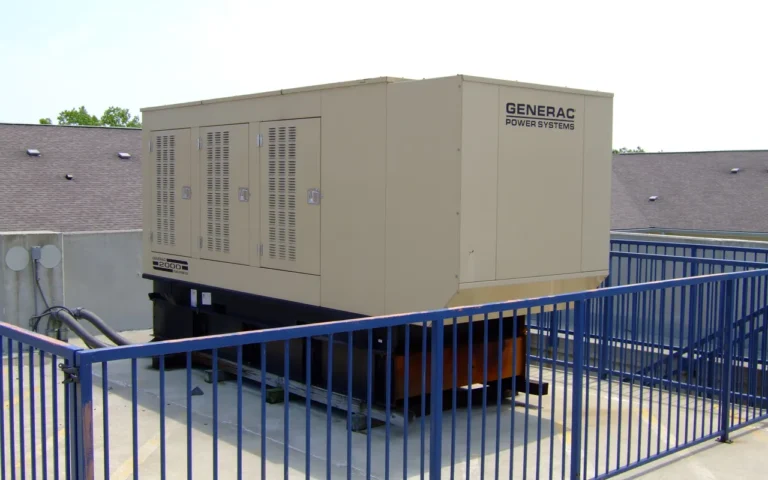
A central AC compressor draws a big surge when it starts, and the data plate lists that figure as LRA (locked rotor amps). The generator has to handle that surge on top of everything else that’s running. Two things can shrink the generator you need. A soft-start kit on the compressor cuts the surge. A load-management module, offered by manufacturers like Generac and Kohler, briefly sheds big loads such as the AC or water heater while others start.
Other loads to check on your list
- Heat and hot water. Gas appliances keep the load small. Electric furnaces, heat strips and electric water heaters push the size up fast.
- A well pump. Its motor adds a start-up surge on top of the air conditioner’s.
- Cooking. An electric range is a large 240 volt load if you want it covered.
- Future loads. An EV charger or a hot tub added later can outgrow a generator sized only for today.
How installers actually size it
- Load list or load calculation. They note every major appliance, often using the panel schedule and data plates. Many manufacturers provide sizing worksheets.
- Largest motor starting load. Usually the central AC, sometimes a well pump. The LRA or start current on the data plate tells them how big the surge is.
- Load management options. Shedding the AC or water heater briefly while other loads start can drop the required size.
- Fuel supply check. Natural gas meters and propane tanks must supply enough fuel at full load. Gas line sizing follows the fuel gas code and the manufacturer’s tables.
Fuel use to expect
Generac’s spec sheet for its 22 kW Guardian lists 2.53 gallons of propane an hour at half load and 3.90 at full load (228 and 327 cubic feet an hour on natural gas). During a long outage on propane, tank size matters. See how much propane standby generators use.
When you compare quotes, watch for these:
- Choosing a size from square footage alone.
- Forgetting future loads like an EV charger or a hot tub.
- Undersized gas supply. A generator starved of fuel can’t deliver its rating.
- Oversizing a lot. Bigger units cost more to buy, install and run.
Sizing, the gas line and the transfer switch are all professional work. Get at least two quotes that each include a written load calculation.
2,400 sq ft sizing questions
Is a 14 kW generator enough for 2,400 sq ft?
For essential circuits, or for a whole house with load management and gas appliances, it can be. For an all-electric home, probably not.
Does a bigger house always need a bigger generator?
No. Appliances and heating type matter far more than floor area.
Will a 22 kW unit run two AC systems?
Often, with soft starters or load management to stagger their starts.
What about a pool pump or hot tub?
Include them in the load calculation, or plan for load management to shed them.
Ask installers for a load calculation, not a size picked from square footage. Before you call, read how to size a standby generator and how big a standby generator to buy. If a portable would cover your essentials, sizing a portable for the house may save you a lot of money.
